Understanding Property Appraisals for Homes in Carter Ranch
Understanding Property Appraisals for Homes in Carter Ranch: A 2026 Homeowner’s Guide
Reading time: 9 minutes
Table of Contents
- What Makes Carter Ranch Appraisals Unique
- The Appraisal Process, Step by Step
- Key Factors Driving Value in 2026
- Common Challenges (and How to Solve Them)
- Comparing Appraisal Outcomes: A Data Snapshot
- Practical Tips Before Your Appraisal Visit
- FAQs
- Your Roadmap Forward
What Makes Carter Ranch Appraisals Unique
If you own a home in Carter Ranch, you already know it’s not just another suburban subdivision. The mix of ranch-style single-family homes, newer infill construction, and mature landscaping creates a patchwork of values that can confuse even seasoned appraisers. Add in 2026’s shifting mortgage rates and tighter inventory, and you’ve got a recipe for appraisal surprises—both pleasant and painful.
Here’s the straight talk: an appraisal isn’t a guess. It’s a documented, defensible opinion of value based on comparable sales, condition, and local market dynamics. But “defensible” doesn’t mean “infallible.” Appraisers are human, data sources lag, and Carter Ranch’s micro-neighborhoods (the older section near the original ranch homestead versus the newer builds off the eastern collector road) often get treated as one homogenous market when they shouldn’t be.
Why Location Nuances Matter So Much Here
Quick scenario: imagine two nearly identical 1,800-square-foot homes, one backing onto the community greenbelt and one facing a busy arterial road. In most national appraisal models, these would be treated similarly. In Carter Ranch, local agents report a 6-9% value gap between the two simply due to lot placement. If your appraiser isn’t familiar with these hyperlocal patterns, your valuation could miss the mark.
The Role of Recent Renovations
Kitchen and bathroom updates remain the biggest value levers in 2026, according to regional remodeling-to-value studies. A mid-range kitchen remodel in Carter Ranch (cabinets, countertops, updated appliances) is currently recovering roughly 70-78% of cost at resale, per local real estate broker estimates—slightly above the national average due to strong buyer demand in the area.
The Appraisal Process, Step by Step
Whether you’re refinancing, selling, or contesting a property tax assessment, the appraisal process generally follows the same skeleton:
- Order and Assignment – A lender, homeowner, or county assessor requests the appraisal.
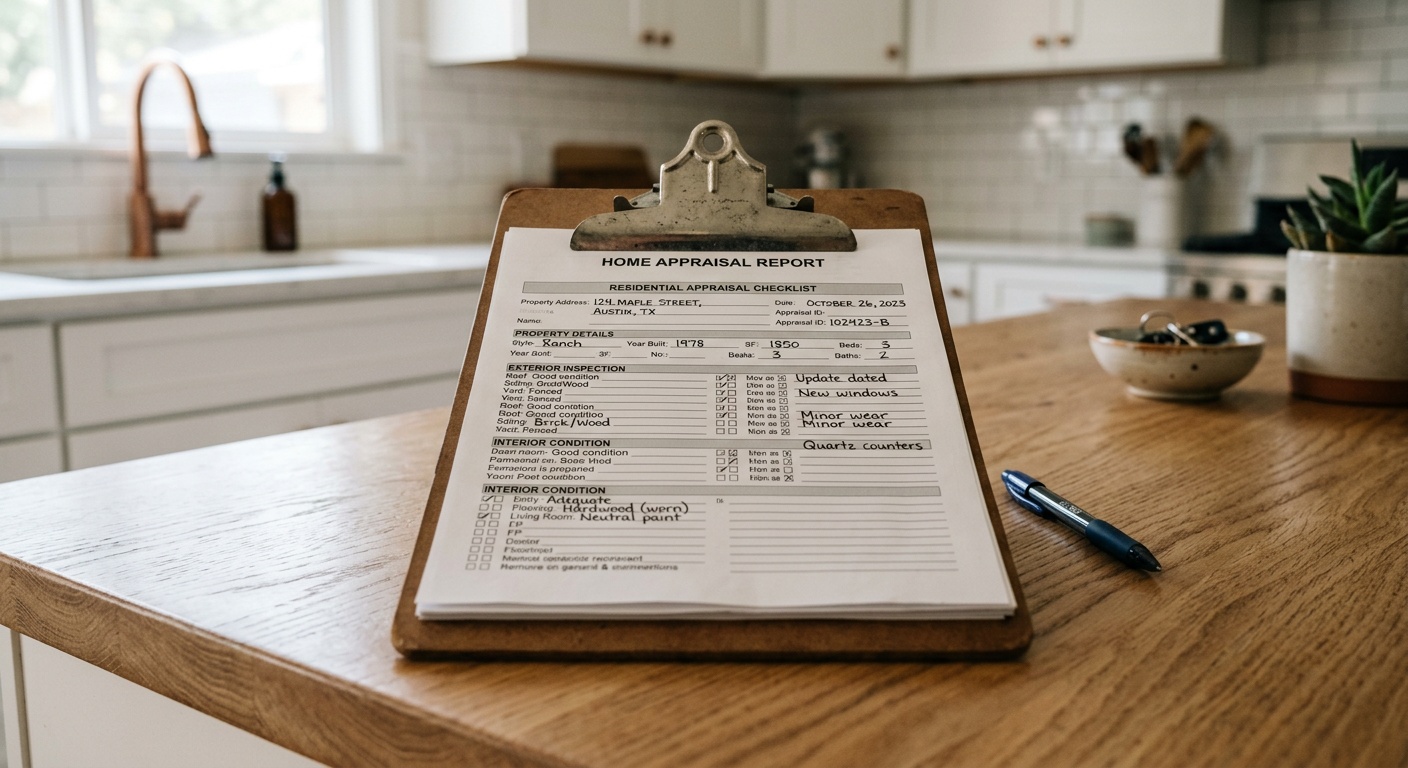
- Property Inspection – The appraiser walks the home, measures square footage, and notes condition, upgrades, and defects.
- Comparable Sales Analysis – Recent sales (typically within the last 3-6 months, within a mile radius) are pulled and adjusted for differences.
- Value Reconciliation – The appraiser weighs the comparables, cost approach, and (for some properties) income approach to land on a final number.
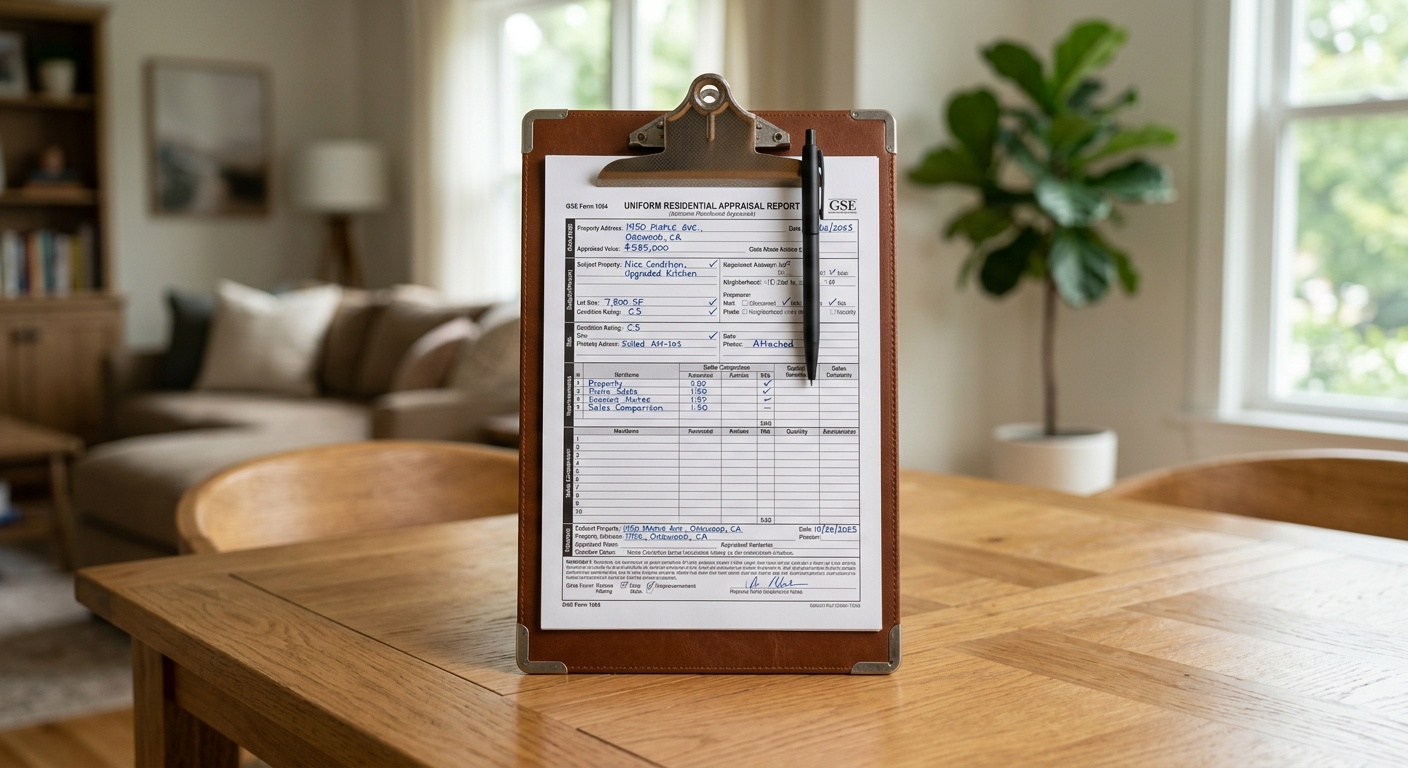
- Report Delivery – A formal report is issued, usually within 5-10 business days in 2026’s still-elevated demand environment.
Pro Tip: Ask your appraiser (through your lender or agent) whether they’ve completed comparable work in Carter Ranch specifically in the last 12 months. Local familiarity is one of the strongest predictors of an accurate valuation.
Key Factors Driving Value in 2026
Several forces are shaping Carter Ranch valuations this year:
- Mortgage rate stabilization – With rates hovering in the low-6% range for much of 2026, buyer competition has cooled slightly from the frenzy of 2021-2022 but remains healthier than the 2023 slowdown.
- Limited new construction – Carter Ranch has seen minimal new inventory since 2024, keeping resale values firm.
- School district performance – Homes zoned for the top-rated elementary school within Carter Ranch continue to command a measurable premium.
- Energy efficiency upgrades – Solar installations and updated HVAC systems are increasingly factored into appraiser adjustments, reflecting buyer priorities shifting toward lower utility costs.
Common Challenges (and How to Solve Them)
Challenge 1: Inconsistent Comparable Sales
Because Carter Ranch blends older ranch homes with newer construction, appraisers sometimes pull comparables that don’t truly match your home’s era or style. Solution: Provide your appraiser (or request through your agent) a list of 3-5 comparable sales you believe are most relevant, along with reasons why. This doesn’t guarantee they’ll be used, but it gives the appraiser useful context.
Challenge 2: Undervalued Renovations
Homeowners frequently feel their upgrades aren’t reflected in the final number. Solution: Keep a renovation folder with receipts, permits, and before/after photos. Present this at the inspection—appraisers can’t credit what they don’t know about.
Challenge 3: Appraisal-Value Gaps in a Cooling Market
As 2026’s market normalizes, some sellers who priced based on 2022-era comparables are seeing appraisals come in below contract price. Solution: Price listings using trailing 90-day data, not year-old peak comparables, and be prepared to negotiate if a gap appears.
Comparing Appraisal Outcomes: A Data Snapshot
| Scenario | Avg. Appraisal Turnaround | Typical Value Variance | Common Cause |
|---|---|---|---|
| Standard Refinance | 6-8 days | ±3% | Comparable selection |
| Purchase Contract Review | 5-7 days | ±5% | Overbidding vs. comps |
| Tax Assessment Dispute | 10-14 days | ±8% | Outdated county data |
| Post-Renovation Reappraisal | 7-9 days | ±6% | Incomplete documentation |
| Estate/Inheritance Valuation | 9-12 days | ±4% | Deferred maintenance |
Where Carter Ranch Values Stand: A Visual Comparison
Values indexed against the highest-performing sub-area (100%). Figures reflect early 2026 local sales data and are illustrative of relative positioning, not exact appraisal outcomes.
Practical Tips Before Your Appraisal Visit
- Declutter and deep clean – Appraisers factor in perceived condition, and clutter can subtly influence subjective quality ratings.
- Fix small deferred maintenance – Leaky faucets, cracked tiles, and peeling paint are cheap fixes that avoid “condition” markdowns.
- Compile a home improvement summary – Include dates, costs, and permits for major work completed since your last appraisal or purchase.
- Highlight energy features – Solar panels, upgraded insulation, or smart thermostats increasingly matter to 2026 buyers and appraisers alike.
- Be present, but not overbearing – Answer questions honestly; avoid pressuring the appraiser toward a specific number, which can raise red flags.
FAQs
How often should I expect my Carter Ranch home to be reappraised?
For most homeowners, appraisals happen at refinancing, sale, or major renovation milestones—typically every 3-7 years. County tax assessments, however, may occur annually or biennially depending on local policy, and these are separate from lender-ordered appraisals.
Can I dispute a low appraisal?
Yes. You can request a Reconsideration of Value by submitting additional comparable sales, correcting factual errors (like wrong square footage), or providing renovation documentation the appraiser may have missed. Success rates improve significantly when you provide specific, verifiable data rather than general objections.
Does Carter Ranch’s HOA affect appraisal value?
It can, both positively and negatively. Well-funded HOAs maintaining greenbelts and community amenities often support higher comparable values, while high monthly dues or pending special assessments can create buyer hesitation, indirectly pressuring appraised values downward in borderline cases.
Your Roadmap Forward
Property appraisals in Carter Ranch aren’t a mystery—they’re a system you can learn to work with strategically. As 2026’s market continues stabilizing after several volatile years, homeowners who understand local nuances will consistently outperform those who treat their appraisal as a passive event.
- Step 1: Gather your renovation records and recent comparable sales before any appraisal is scheduled.
- Step 2: Address minor repairs and improve curb appeal in the two weeks prior to inspection.
- Step 3: Ask directly whether your appraiser has Carter Ranch-specific experience.
- Step 4: If the value comes in low, use documented evidence—not emotion—to request reconsideration.
- Step 5: Revisit your home’s value annually, even informally, so you’re never caught off guard by market shifts.
The broader lesson extends beyond Carter Ranch: as data-driven valuation tools become more common in 2026 and beyond, informed homeowners who blend local knowledge with documented evidence will always have the upper hand over a purely automated estimate.
So, what’s your next move—will you wait for your next appraisal to arrive, or start building your value case today?