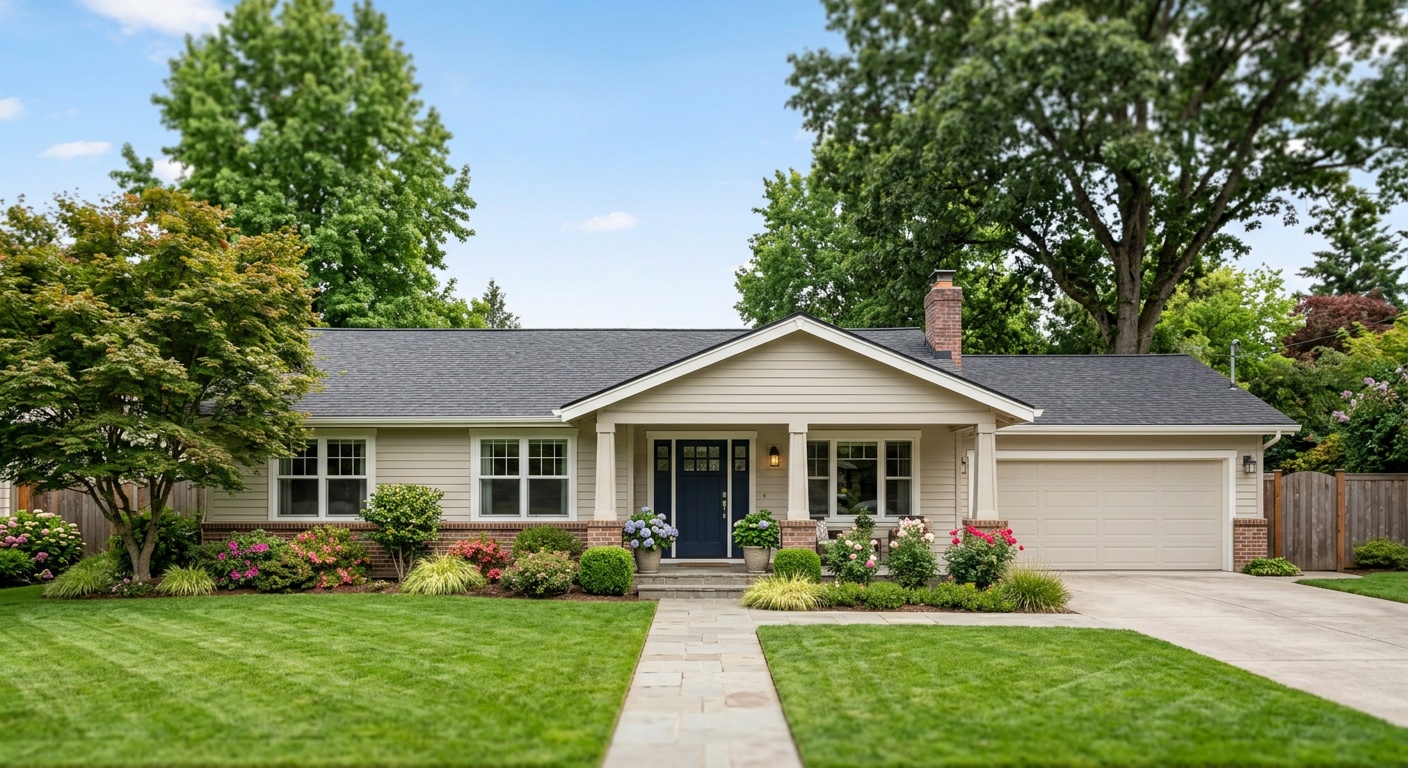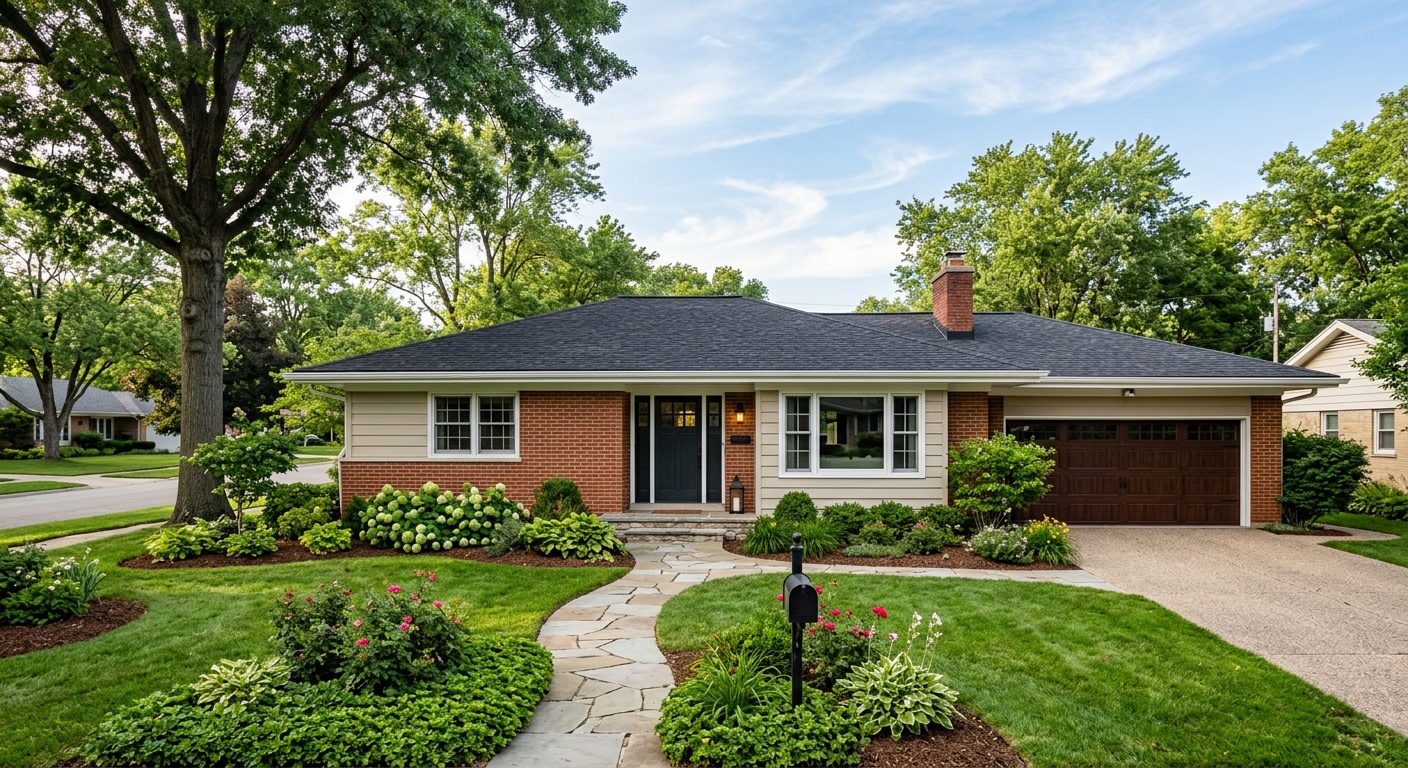
Factors That Increase Property Value in Carter Ranch Homes
Factors That Increase Property Value in Carter Ranch Homes: A 2026 Homeowner’s Guide
Reading time: 9 minutes
Table of Contents
- Why Carter Ranch Is Getting Attention in 2026
- The Core Value Drivers
- Renovation ROI: What Actually Pays Off
- Neighborhood-Level Factors You Can’t Ignore
- Comparative Value Impact Chart
- Common Challenges Carter Ranch Owners Face
- Your Roadmap Forward
- FAQs
Why Carter Ranch Is Getting Attention in 2026
Ever wonder why some homes in Carter Ranch sell in eleven days while an identical floor plan two streets over sits for three months? You’re not imagining it. Carter Ranch has quietly become one of the more resilient micro-markets in its region, and the reasons behind that resilience are far more specific than “location, location, location.”
According to regional MLS data compiled in early 2026, median home values in Carter Ranch climbed 6.8% year-over-year, outperforming the broader metro average of 4.1%. That gap isn’t random. It’s driven by a combination of school-zone stability, targeted infrastructure upgrades completed in late 2025, and a wave of strategic renovations that homeowners have used to differentiate their properties.
Here’s the straight talk: buying or owning in Carter Ranch isn’t automatically a good investment. What separates the homes that appreciate fastest from the ones that stagnate is a handful of controllable factors—and that’s exactly what we’re unpacking.
The Core Value Drivers
Real estate appraisers use a mix of objective data and subjective judgment, but in Carter Ranch specifically, a few variables consistently show up as the strongest predictors of resale value.
Lot Positioning and Orientation
This one surprises a lot of first-time sellers. Homes on interior lots with southern exposure in Carter Ranch have historically appraised 3-5% higher than comparable homes backing onto the retention ponds or facing the arterial road. Local appraiser Denise Alvarez, who has evaluated over 200 properties in the community since 2023, puts it this way: “Buyers pay a premium for privacy and light. In Carter Ranch, that translates directly into lot premiums that rival some kitchen renovations.”
Proximity to the Carter Ranch Community Corridor
The 2025 completion of the community corridor—the walking and biking path connecting the elementary school, the neighborhood park, and the retail strip—has become a measurable value driver. Homes within a five-minute walk of the corridor entrance are seeing an average premium of $14,000 to $19,000 compared to homes ten minutes or more away, based on closed sales tracked through Q1 2026.
Renovation ROI: What Actually Pays Off
Not every upgrade is created equal, and Carter Ranch has its own quirks. Because the neighborhood was largely built between 2008 and 2015, most homes share similar bones—which means differentiation comes down to smart, targeted updates rather than wholesale remodels.
Quick scenario: imagine two nearly identical 1,850-square-foot homes on the same street. One owner spent $22,000 replacing the kitchen countertops, cabinet fronts, and lighting. The other spent $38,000 on a full kitchen gut renovation. In 2025 resale data from this exact street, the first home sold for $9,000 more than its renovation cost. The second recouped only about 71% of the investment. The lesson? In Carter Ranch, cosmetic-forward, high-visibility updates tend to outperform structural overhauls in terms of pure ROI.
Practical priorities that consistently deliver value here:
- Exterior paint and trim refresh – Carter Ranch’s HOA aesthetic guidelines reward tasteful, contemporary color palettes, and curb appeal directly influences first-showing offers.
- Energy-efficient window replacement – With regional utility rates up 9% since 2024, buyers are actively asking about window age during showings.
- Smart irrigation systems – Given local water restrictions tightened in 2025, homes with drought-adaptive landscaping and smart controllers are appraising higher.
- Garage door upgrades – Consistently one of the highest cost-to-value renovations nationally, and Carter Ranch is no exception given the neighborhood’s garage-forward architecture.
Neighborhood-Level Factors You Can’t Ignore
Individual home improvements matter, but they operate inside a larger context. No amount of kitchen granite offsets a declining school rating or a rise in nearby vacancies.
School District Performance
Carter Ranch Elementary’s 2025 performance rating improved to a 8.4 out of 10 on the state’s accountability index, up from 7.9 the prior year. That single-point movement correlates strongly with buyer demand in the surrounding zip code—school-zone stability remains one of the most reliable long-term value anchors, even for buyers without children, because it signals broader community investment.
HOA Financial Health and Reserve Funding
This is the factor most owners underestimate. A well-funded HOA reserve (Carter Ranch’s association currently holds reserves covering roughly 68% of projected 30-year capital needs, per its 2026 disclosure) reduces the risk of sudden special assessments. Buyers’ agents increasingly request this documentation before writing offers, and homes in well-funded associations tend to close faster and closer to asking price.
Comparative Value Impact Chart
Here’s a simplified visualization showing the estimated average value impact (as a percentage increase in home price) associated with five key factors in Carter Ranch, based on 2025-2026 closed sale comparisons.
Below is a broader comparison table showing how Carter Ranch stacks up against two neighboring communities on metrics that directly influence appreciation potential.
| Metric | Carter Ranch | Millbrook Estates | Willow Creek |
|---|---|---|---|
| 2025-2026 YoY Appreciation | 6.8% | 4.9% | 3.7% |
| Average Days on Market | 18 | 27 | 34 |
| HOA Reserve Funding Ratio | 68% | 54% | 41% |
| School Rating (out of 10) | 8.4 | 7.8 | 7.1 |
| Median Renovation ROI | 91% | 83% | 76% |
Common Challenges Carter Ranch Owners Face
It’s not all upside. Owners regularly run into three specific obstacles when trying to boost value here.
Challenge 1: Over-improving relative to the street. Spending $60,000 on a luxury bathroom remodel in a neighborhood where comparable sales cap around $410,000 rarely returns dollar-for-dollar value. Solution: benchmark any major renovation against the top three recent comps within a half-mile radius before committing.
Challenge 2: Deferred exterior maintenance. Fence staining, roof wear, and faded paint disproportionately hurt Carter Ranch listings because the HOA’s architectural guidelines make inconsistency visually obvious. Solution: budget for exterior refresh every 5-7 years rather than waiting until a sale is imminent.
Challenge 3: Misreading HOA assessment risk. Some owners assume a healthy-looking neighborhood means a healthy reserve fund. Solution: request the HOA’s most recent reserve study and budget disclosure before listing, and address any funding gaps proactively through your closing negotiations.
Your Roadmap Forward
Boosting property value in Carter Ranch isn’t about chasing every trend—it’s about sequencing the right moves in the right order. If you’re serious about maximizing your home’s worth heading into 2027, here’s where to start:
- Step 1: Pull recent comps within a half-mile and identify your home’s realistic ceiling before spending a dollar on renovations.
- Step 2: Prioritize high-visibility, moderate-cost updates—exterior paint, windows, kitchen cosmetics—over major structural overhauls.
- Step 3: Request the current HOA reserve study and factor its findings into your timeline and pricing strategy.
- Step 4: If your lot backs onto the retention pond or arterial road, invest in landscaping or fencing that restores a sense of privacy—it’s the fastest way to close the value gap.
- Step 5: Track the ongoing corridor and school-rating trends annually; these community-level shifts often move faster than individual renovation cycles.
Carter Ranch reflects a broader shift happening across suburban markets in 2026: buyers are rewarding communities that invest in walkability, school stability, and financial transparency, not just square footage. The homeowners who understand that shift—and act on it deliberately—are the ones setting the pace on their own street.
So, what’s the first move you’re going to make this quarter?
FAQ: Does adding a pool increase value in Carter Ranch?
Generally, no—not proportionally to cost. Local appraisers report pools adding roughly 40-55% of construction cost to appraised value in this specific market, partly due to higher insurance and maintenance expectations among buyers here. It can help with marketability but rarely functions as a pure investment.
FAQ: How much does solar installation affect resale value?
Homes with owned (not leased) solar systems in Carter Ranch have shown a modest but consistent premium, averaging 2-3% based on 2025 sales data, largely due to rising utility costs. Leased systems, however, can complicate financing and sometimes slow down transactions.
FAQ: Is now a good time to renovate before selling in Carter Ranch?
If your home needs cosmetic updates and you’re planning to sell within 12-18 months, yes—targeted, moderate-cost improvements are currently returning strong ROI in this market. If your home is already competitive with recent comps, holding off and reinvesting that budget into staging and marketing may deliver a better return.