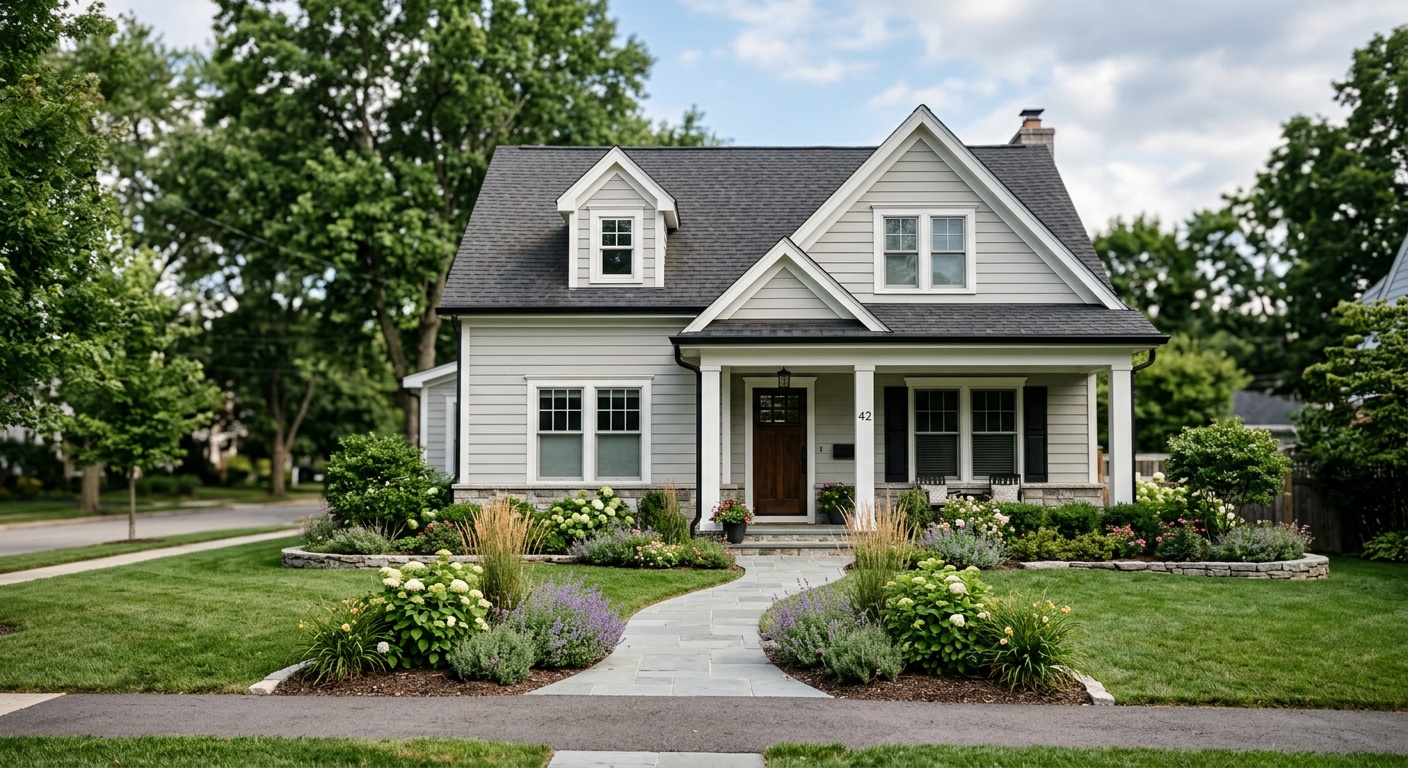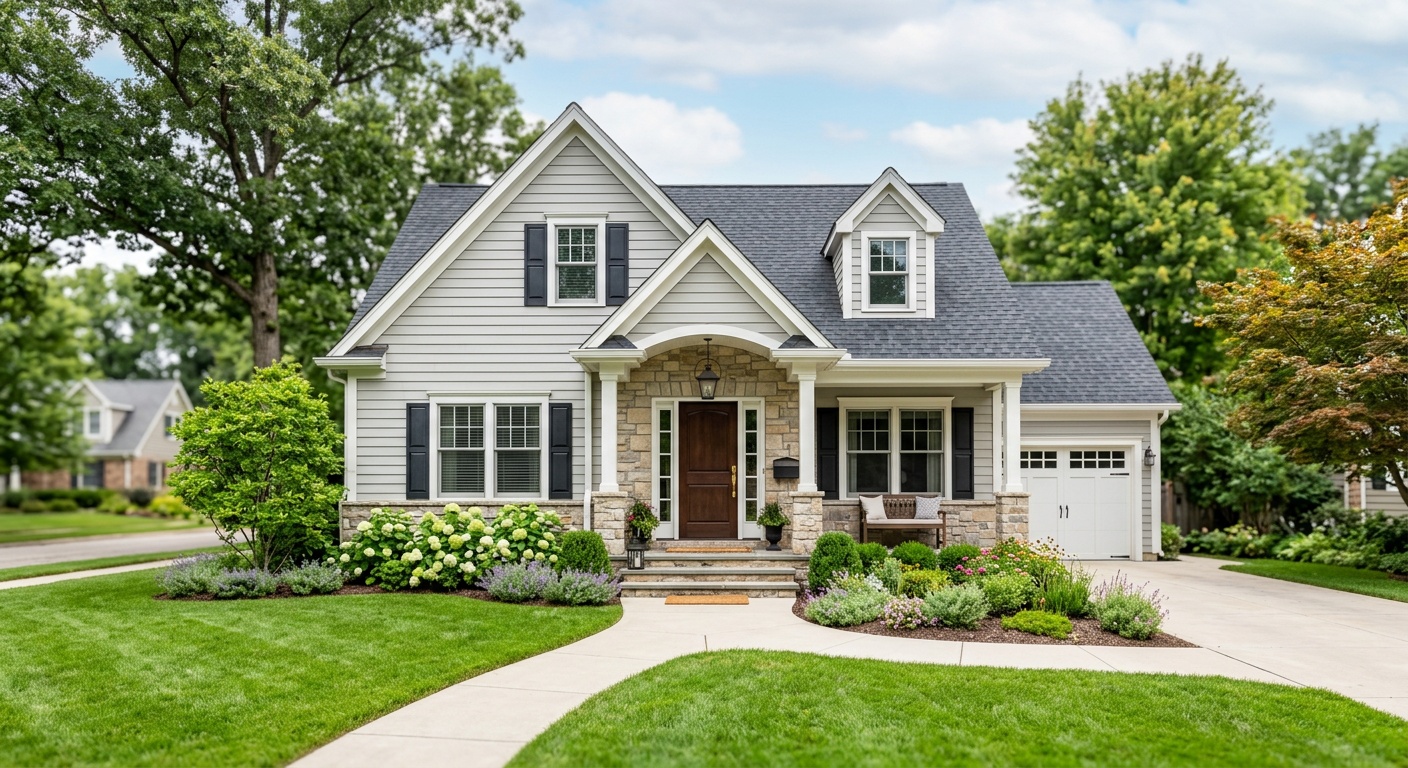
Zillow Home Value Estimates for Carter Ranch Properties Explained
Zillow Home Value Estimates for Carter Ranch Properties Explained
Reading time: 9 minutes
Table of Contents
- The Basics: What a Zestimate Actually Measures
- Carter Ranch in 2026: A Snapshot of the Market
- How Accurate Are Zestimates for Carter Ranch Homes?
- Real Scenarios: Three Carter Ranch Case Studies
- Common Challenges and How to Overcome Them
- Frequently Asked Questions
- Your Roadmap Forward
The Basics: What a Zestimate Actually Measures
Ever pulled up a Zillow listing for a Carter Ranch address and wondered how that number was calculated? You’re not alone. Thousands of homeowners in Carter Ranch communities—whether you’re in the Chino Hills version, the Riverside County pocket, or one of the several similarly named subdivisions scattered across the Southwest—check their Zestimate more often than they check their bank balance.
Here’s the straight talk: a Zestimate isn’t an appraisal. It’s a statistically modeled estimate built from public records, tax assessments, MLS data (where available), and user-submitted details. Zillow’s own documentation states the median error rate for on-market homes nationally sits around 2.4%, while off-market homes carry a wider median error rate closer to 7.5% as of Zillow’s most recent 2025 methodology update.
That distinction matters enormously for Carter Ranch, where inventory tends to be tight and many homes haven’t changed hands in over a decade.
Why the Algorithm Struggles With Established Neighborhoods
Zillow’s model leans heavily on recent comparable sales. In neighborhoods where turnover is slow—which describes most Carter Ranch subdivisions built in the late 1990s and early 2000s—the algorithm has fewer fresh data points to anchor against. When comps are scarce, the model starts weighting tax-assessed values and broader zip-code trends more heavily, which can pull an individual Zestimate away from what a buyer would actually pay today.
Carter Ranch in 2026: A Snapshot of the Market
Quick scenario: imagine you’re a homeowner in Carter Ranch who bought in 2018 for $410,000. By early 2026, your Zestimate shows $612,000. Is that realistic, or is it algorithmic optimism? Let’s dig into the data.
Across most Carter Ranch communities, 2025 closed out with median sale prices roughly 4.1% higher year-over-year, according to regional MLS aggregates compiled through Q4 2025. Entering 2026, inventory remains historically low—many pockets are sitting at under two months of supply—which keeps upward pressure on values even as mortgage rates hover in the 6.2%–6.6% range.
Local real estate broker Denise Alvarado, who has sold homes in Carter Ranch subdivisions for over 15 years, puts it bluntly: “Buyers in this market aren’t negotiating on price the way they were in 2023. If a Carter Ranch home is priced within 2% of recent comps and shows well, it’s under contract in nine days or less.”
Key Market Drivers Shaping Estimates This Year
Three forces are influencing Zestimate behavior in Carter Ranch right now:
- Limited new construction — most Carter Ranch tracts are built out, so appreciation is driven by resale competition rather than new supply.
- School district ratings — Zillow’s model increasingly factors in school boundary data, and Carter Ranch’s assigned schools have seen ratings improve in several districts since 2024.
- Renovation blind spots — the algorithm can’t see your new kitchen unless you or an agent update the listing record, which creates systematic undervaluation for upgraded homes.
How Accurate Are Zestimates for Carter Ranch Homes?
Let’s turn potential confusion into strategic clarity. Below is a simplified comparison of how Zestimate accuracy typically breaks down by property type within neighborhoods like Carter Ranch, based on patterns Zillow has publicly disclosed alongside local appraisal comparisons.
| Property Type | Typical Median Error | Common Reason for Discrepancy |
|---|---|---|
| On-market, recently listed | 1.8% – 3.0% | Fresh MLS data updates estimate quickly |
| Off-market, no recent sale | 6.5% – 8.5% | Relies on tax data and stale comps |
| Recently renovated interior | 9% – 14% | Algorithm can’t detect unlisted upgrades |
| Corner lots / atypical layouts | 7% – 11% | Fewer directly comparable comps nearby |
| Homes with pools or ADUs | 8% – 13% | Feature value inconsistently weighted |
Below is a simple visualization comparing typical Zestimate deviation ranges by scenario, using the midpoint of each error range above:
2.4%
7.5%
11.5%
9%
10.5%
Real Scenarios: Three Carter Ranch Case Studies
Case 1: The Underestimated Renovation
The Hendersons purchased their Carter Ranch home in 2020 for $385,000. By January 2026, their Zestimate read $498,000. But after a $60,000 kitchen and primary bath remodel completed in mid-2025—never updated on Zillow’s facts page—their appraised value came back at $541,000 when they applied for a refinance. The gap? Roughly $43,000, almost entirely attributable to unreported renovation data.
Case 2: The Corner-Lot Surprise
A corner-lot property on a cul-de-sac showed a Zestimate of $455,000, but when listed, it sold in eleven days for $479,000 after a multiple-offer situation. The lot’s unusual shape and extra yard space simply weren’t captured well by the automated model, which defaulted to standard-lot comps nearby.
Case 3: The Accurate Match
Not every story involves a mismatch. A straightforward three-bedroom, two-bath Carter Ranch home with no major upgrades listed at $432,000—just 1.6% above its Zestimate of $425,300—and closed almost exactly at asking price. When comps are abundant and the home is unremarkable in a good way, the model performs impressively well.
Common Challenges and How to Overcome Them
Challenge 1: Outdated Facts Sheets
Many Carter Ranch homeowners never claim their Zillow listing or update basic facts like square footage, bedroom count, or renovation history. Practical fix: Claim your home on Zillow, verify the facts sheet, and upload recent photos of upgrades. This single step frequently narrows the estimate gap by 3-6%.
Challenge 2: Thin Comp Data
When few homes have sold nearby recently, ask a local agent to pull a comparative market analysis (CMA) that includes pending sales and off-MLS transactions the algorithm can’t see. A CMA typically reflects real-time buyer behavior more accurately than any automated tool.
Challenge 3: Emotional Anchoring
Homeowners sometimes treat the Zestimate as gospel when pricing a sale, either overpricing based on inflated numbers or underpricing out of caution. Pro tip: Use the Zestimate as a conversation starter with your agent, not a final answer—triangulate it against a CMA and a pre-listing appraisal for anything above $450,000.
Frequently Asked Questions
Is the Zestimate the same as an appraisal for my Carter Ranch home?
No. An appraisal involves a licensed professional physically inspecting the property and applying formal valuation standards. A Zestimate is an automated statistical estimate that updates based on available data and can shift week to week without any change to your actual home.
Why did my Carter Ranch Zestimate change without any renovations?
Zillow’s model recalculates regularly using new sales in your area, updated tax assessments, and shifts in broader market trends. If a similar home two streets over just sold for significantly more or less, that transaction can ripple into your estimate even though nothing about your own house changed.
Should I use the Zestimate to set my listing price?
Treat it as one data point among several. Pair it with a professional CMA, recent closed comps within a half-mile, and an honest assessment of your home’s condition and upgrades. Homes priced using the Zestimate alone in Carter Ranch have, in several documented cases, left tens of thousands of dollars on the table or sat unsold longer than necessary.
Your Roadmap Forward
Zestimates aren’t going anywhere—if anything, as AI-driven valuation models mature through 2026 and beyond, they’ll become more woven into how buyers, lenders, and even insurers assess property value across communities like Carter Ranch. That makes understanding their limitations less of a nice-to-have and more of a financial necessity.
- Claim and update your Zillow listing with accurate square footage, renovations, and recent photos.
- Cross-check your Zestimate against a local agent’s CMA at least once a year.
- Track the trend line, not the single number—Zillow’s historical chart tool reveals patterns more reliable than any one snapshot.
- Get a professional appraisal before refinancing, selling, or making major equity-based financial decisions.
- Talk to a Carter Ranch specialist who tracks micro-trends the algorithm simply can’t see yet.
You know your home better than any algorithm ever will—the question is whether you’re using that knowledge to your advantage or letting a number on a screen make decisions for you. What’s your next move going to be?